
From Institutional Failure to Constitutional Repair
Federalist PapersThis thread traces the larger argumentative arc from acknowledged defects in the Confederation to a proposed constitutional system and a route for future correction.
increasing Bearing strength in each event
 decreasing
Bearing strength in each eventdecreasingFailure Acknowledged

Failure Acknowledged
Experience replaces speculation
Hamilton argues that the Confederation’s weaknesses are now visible in missed obligations, poor credit, weak commerce, and ineffective national administration. The case rests on observed results rather than hypothetical dangers alone.
A structural cause
Requisitions, lack of sanctions, unequal voting, and missing national judicial authority are presented as connected defects. The system needs more than minor repairs because its basic method of governing States has failed.
The Means Must Match

The Means Must Match
Duties create requirements
Hamilton argues that national responsibilities in defense, peace, commerce, and foreign relations require adequate powers. A government cannot be expected to achieve ends when denied the means necessary to reach them.
Discretion and restraint
The argument acknowledges that power can be abused but treats institutional structure as the principal protection. The central question becomes whether the Constitution’s design can safely hold the authority required.
Power Examined by Function
Power Examined by Function
Classes of authority
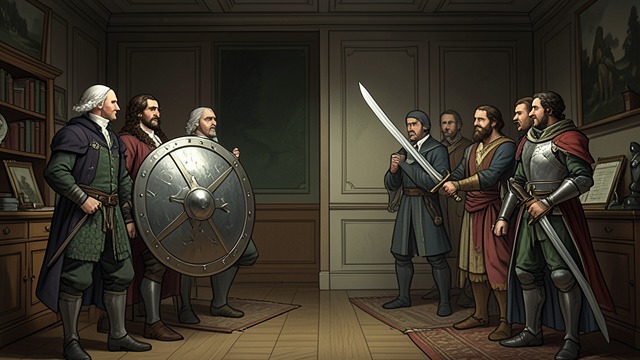
Madison organizes federal powers by their purposes, including defense, foreign relations, interstate harmony, and shared institutions. The method asks what each power is intended to accomplish.
Powers and prohibitions
He argues that the Constitution both grants national authority and restricts State actions that threaten common interests. The review defends an enumerated system rather than an unlimited national legislature.
Safeguards in Structure

Safeguards in Structure
Governments check governments
Madison argues that State institutions can resist federal encroachment because they are close to citizens and retain extensive authority. The Union also provides a common framework for shared national concerns.
Departments check departments
The separation and interaction of legislative, executive, and judicial powers add another layer of protection. The Constitution is defended as a system of overlapping safeguards rather than a single restraint.
Ratification and Amendment
Ratification and Amendment
The rights objection
Hamilton argues that the Constitution contains important protections and that a separate bill of rights could create misleading implications about ungranted powers. He contends that the structure itself secures rights through limited authority and public accountability.
Correction through experience
The final essay argues that adoption should not be delayed in pursuit of perfection. A constitutional amendment process can address defects after experience reveals them, preserving both reform and political stability.
Federalist Nos. 15–22, December 1–14, 1787
Federalist Nos. 23 and 31, December 18, 1787–January 1, 1788
Federalist Nos. 41–44, January 19–25, 1788
Federalist Nos. 45–51, January 26–February 6, 1788
Federalist Nos. 84–85, May 28, 1788
